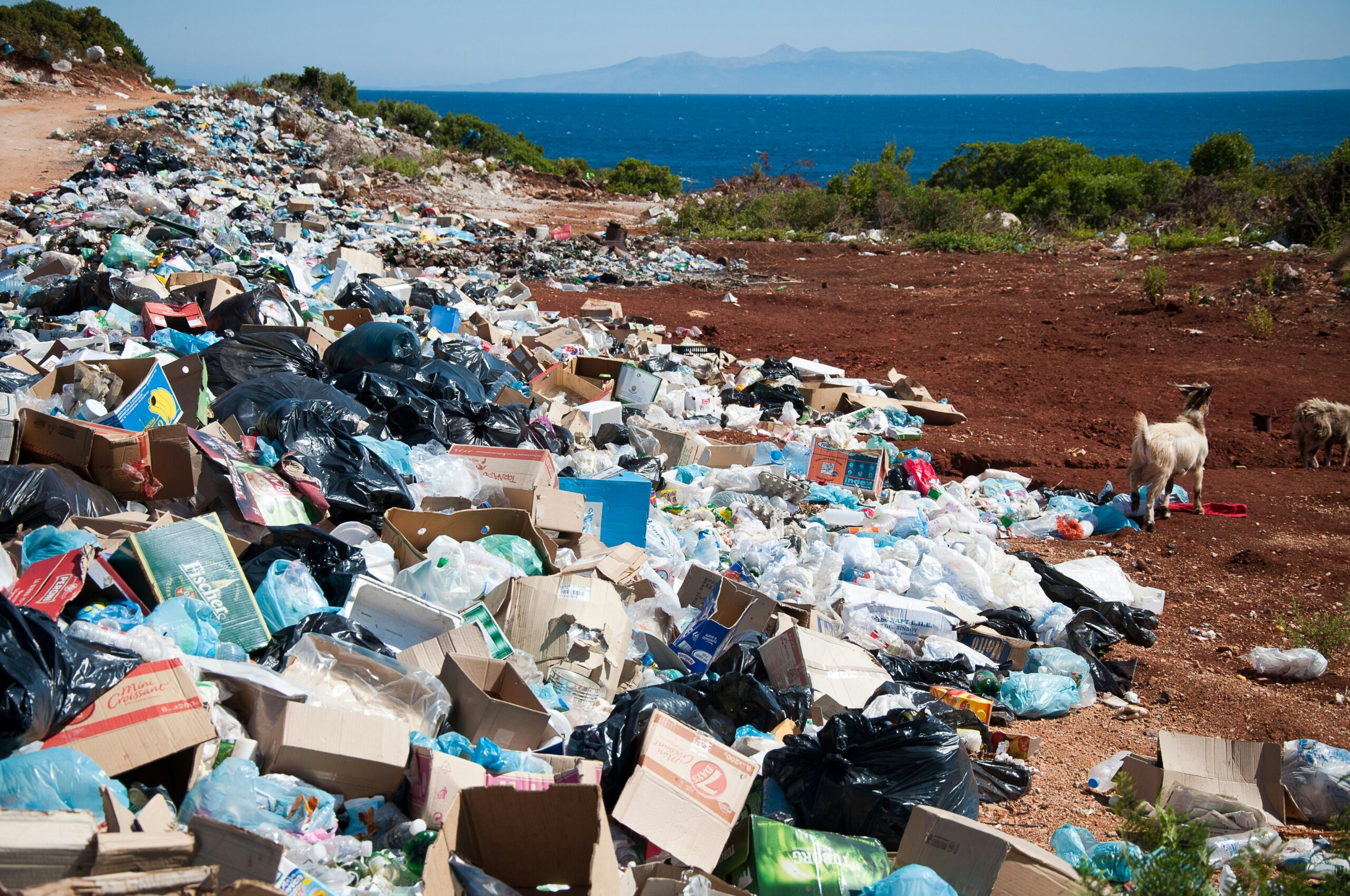
E-waste is short for electronic or electrical waste. Basically anything that runs on electricity or batteries that is discarded becomes e-waste. The question, can we recycle our way out of e-waste is complicated. The answer for now is no, we can’t, at least not for a long while.
To get a better understanding, I’ve broken the topic down into our current situation. From there I’ll compare our current situation to a circular economy. This closed loop system I wrote about previously in an article titled Circular Economy.
After identifying where we’re at vs where a circular economy would take us, we’ll take a look at where the bottle necks are and I’ll provide a roadmap to getting us into the future. However, this still does not remove us completely from impacting the environment. That’s where I’ll dive into some futuristic ideas on how we can improve even more.
Let’s dive right in.
E-Waste: Current Situation
Will we run out of rare earth elements?
The short answer is that we are unlikely to literally run out of atoms, but we are heading toward severe economic and structural shortages of critical tech minerals within the next 20 to 50 years if current consumption and e-waste trends continue.
At current consumption rates, key materials required for electronics face critical supply thresholds listed below.
Current State of Materials
- Indium and Gallium (Displays & Semiconductors) – Used in touchscreens, LEDs, and advanced chips. Known economic reserves of easily extractable indium and gallium have estimated timelines of 20 to 30 years. Source: USGS Mineral Commodity Summaries.
- Copper (Wiring, Circuit Boards, Data Centers) – The backbone of electrical transmission. At current production levels, known reserves are estimated to last 50 to 60 years, but supply deficits are projected to begin much sooner due to surging demand from AI data centers, electric vehicles, and power grids. Source for reserves: International Copper Study Group. Source for demand deficits: IEA Global Critical Minerals Summary.
- Lithium and Cobalt (Batteries) – Essential for portable devices and energy storage. Known lithium reserves face severe structural shortfalls over the next 15 to 30 years unless battery chemistry shifts or secondary recovery scales dramatically. Source: IEA Critical Minerals Summary. (same source as above)
- Heavy Rare Earth Elements (Dysprosium, Neodymium, Terbium) – Essential for micro-speakers, vibration motors, and high-efficiency magnets. While geologically abundant, processing them is extremely concentrated and environmentally taxing. Supply strain and geopolitical bottlenecks are already an immediate concern. Source: IEA Critical Minerals Summary. (same source as above)
This is where e-waste becomes central to the conversation. Currently, less than a quarter of global e waste is formally recycled. The rest ends up in landfills, incinerators, or tucked away in drawers.
Smartphones, for instance, contain concentrations of gold, silver, copper, and rare earths that are up to 40 to 50 times richer than raw underground ore. Throwing away electronics means we are burying the exact materials needed to build future devices.
What Happens Before We Run Out?
There are three known forces that would kick in before we ever run out of the rare earth materials.
| Action | Reasoning |
| Skyrocketing cost | As ore quality drops, extraction requires exponentially more energy and water, driving up device prices. |
| Material Substitution | Semiconductor and hardware engineers redesign hardware to use more abundant alternatives (e.g., sodium-ion replacing lithium, or synthetic materials replacing rare earths). |
| Mandated Circularity | Electronics manufacturers shift toward “urban mining”—recycling existing e-waste to recover materials at scale rather than relying on fresh extraction. |
Circular Economy
If a full circular economy were implemented today, the timelines until mineral “depletion” wouldn’t just double or triple—for many elements, the concept of depletion would virtually vanish, extending availability from decades to centuries.
Studies from organizations like the SINTEF research institute estimate that circular strategies—combining repair, lifetime extension, urban mining, and high-yield recycling—can reduce total cumulative demand for virgin critical minerals by 50% to 58% by 2050.
| Material | Linear Timeline (Current) | Circular Economy Timeline | Primary Mechanism |
| Indium and Gallium | 20-30 years | 100 years | High efficiency hydro metallurgical recover captures up to 90% of metals from discarded screens and logic boards. |
| Lithium and Cobalt | 15-30 years | 80-120 years | Closed-loop battery recycling (re-using old cathodes directly) covers nearly half of new battery demand by 2050. |
| Copper | 50-60 years | 200+ years | Copper can be recycled infinitely without losing structural or electrical properties. |
| Rare Earth Elements | Vulnerable to geopolitical bottlenecks | Decoupled from raw mining | Secondary recovery from discarded hard drives, EV motors, and speakers drastically cuts reliance on new extraction. |
The timelines before critical shortages jumps once we implement a circular economy. Achieving a circular economy is our next logical step and efforts are underway to implement this. So, you may ask, how do we get there?
What Are The Roadblocks to a Circular Economy?
1. Product Design: “Glued-Together Tech”
Modern electronics are engineered for miniaturization and water resistance, not disassembly. Ultra-thin laptops and smartphones feature glued-in lithium batteries, soldered RAM, and complex multi-element alloys. Disassembling a phone takes significant manual labor or destructive shredding, which degrades material purity before recycling even begins.
2. The Economic Mismatch
Virgin extraction remains subsidized or artificially cheap because primary mining companies don’t pay for the long-term environmental cleanup. Meanwhile, urban mining faces high upfront capital costs for advanced chemical separation facilities, making recycled minerals occasionally more expensive per kilogram than freshly mined ore.
3. The “Hibernation” & Collection Deficit
The biggest failure point in e-waste isn’t always the recycling plant—it’s the collection pipeline. Billions of old smartphones, cables, and laptops sit forgotten in desk drawers (“hibernating hardware”) or are thrown into household trash. Without convenient return streams, valuable metals never reach recycling facilities.
4. Metallurgical Complexity
A modern microchip or display contains up to 60 different elements bonded together at microscopic scales. Separating gold, silver, copper, palladium, and rare earths from a single shredded circuit board without using toxic chemicals or high-emissions smelting requires advanced hydrometallurgical processing that is still scaling up globally.
5. Lack of Enforceable Policy
While regions like the EU are pioneering “Digital Product Passports” and “Right to Repair” mandates, global policy remains fragmented. In many parts of the world, it is still legal to export e-waste under the guise of “used goods,” sending discarded tech to informal scrap yards where hazardous open burning occurs instead of high-yield elemental recovery.
To bridge this gap, electronics manufacturers must pivot from viewing products as disposable items to treating them as temporary packages for high-value atomic assets that they expect to take back, disassemble, and reuse.
Steps Towards A Circular Economy
Shifting from our throw away economy to a circular economy won’t be easy, but it is necessary. We must shift away from fragmented voluntary efforts to systemic, enforced changes across the entire product lifecycle.
Below is a 4 phase roadmap of actionable items ranked from immediate structural policy to long term scaling which is needed to establish a fully circular electronics economy.
High Priority (Policy and Market Realignment) – Phase 1
Legislate Universal Extended Producer Responsibility (EPR): Mandate that electronics manufacturers retain financial and operational accountability for products through their entire lifecycle, forcing them to fund collection and recycling systems directly.
- Enact Comprehensive “Right to Repair” Laws: Require manufacturers to provide publicly accessible service manuals, diagnostic software, and spare parts at fair prices for 7 to 10 years after a device is released.
- Standardize Product Passports: Institute digital product passports (e.g., QR codes or RFID tags on circuit boards) detailing exact elemental compositions, repair histories, and disassembly instructions to streamline automated sorting.
- Remove Subsidies for Virgin Mining: Tax virgin critical mineral extraction while providing tax credits for using certified secondary (recycled) raw materials to level the economic playing field.
Design and Manufacturing Overhaul – Phase 2
- Mandate Modular & Fastener-Based Assembly: Phase out heavy structural glues and soldered components in favor of modular designs, standardized screws, and snap-in parts so devices can be repaired or stripped in minutes rather than hours.
- Harmonize Material Choices: Limit the variety of distinct alloys and chemical fire retardants used in manufacturing, making cross-brand batch processing during recycling exponentially simpler.
- Shift to “Hardware-as-a-Service” (HaaS): Transition business models from selling physical hardware outright to leasing it (e.g., corporate laptops, enterprise servers), ensuring equipment naturally returns to the manufacturer at end-of-life.
Infrastructure and Collection Expansion – Phase 3
- Incentivize Consumer Deposit-Return Systems: Treat electronics like aluminum cans or glass bottles by incorporating refundable deposits into retail purchases to pull old devices out of desk drawers.
- Formalize and Scale Global Take-Back Networks: Establish accessible, standardized drop-off hubs at everyday retail points and municipal centers to eliminate collection friction for consumers.
- Ban International E-Waste Dumping: Enforce strict trade policies prohibiting high-income nations from exporting unprocessed electronics under the pretense of “donations” to developing regions
with weak recycling infrastructure.
Advanced Metallurgical Technology – Phase 4
- Invest in Hydrometallurgical & Direct Recycling: Move away from emissions-heavy smelting toward eco-friendly chemical and biological leaching processes that can separate micro-quantities of rare earths and precious metals at high purities.
- Deploy AI & Robotic Disassembly: Automate sorting facilities using computer vision and robotic arms to identify, unscrew, and strip circuit boards far faster and safer than manual labor.
Above is a huge ask, but absolutely necessary now to prevent upcoming shortages and sky rocketing prices. You may now be wondering after all this work, are we done? Have we achieved side stepping an eventual shortage? We come very close and this buys us time. Our children will thank us for that.
Why A Circular Economy Won’t Last Forever
A circular economy certainly gives us room to breathe but it won’t result in an infinite timeline. The reasons are twofold.
- Thermodynamic Losses (The ~5% Rule): No recovery process is 100% efficient. Small amounts of material are lost during processing, micro-abrasion, or improper sorting. An average 90-95% recycling efficiency rate means a small percentage of virgin mining is still needed for periodic top-ups.
- The “Demand Gap” (Hardware Growth vs. Scrap Supply): Today’s e-waste reflects what we manufactured 5 to 10 years ago. Because tech consumption and data infrastructure continue to grow rapidly, recycling 100% of yesterdays hardware is not enough to build 100% of tomorrows devices. Virgin extraction would still bridge that gap until global tech production reaches a stable plateau.
By shifting from a linear “take-make-dispose” framework to a circular economy model, society effectively converts its electronic hardware from a consumable resource into a permanent, above ground asset bank.
For those looking for a more futuristic solution, and frankly you should be, we’ll look at some high tech solutions.
High Tech Solutions to Overcome Physical Limits
To overcome the physical limits to what our planet can provide and obtain an essentially infinite, perpetual supply of resources for our society, we must look beyond traditional recycling. Physics and theoretical engineering offer us 4 major shifts that could break the boundary of resource constraints.
1. Molecular Nanotechnology (Atomically Precise Manufacturing)
The primary obstacle in current recycling is thermodynamics: separating micro-scale alloys back into pure elemental blocks requires enormous energy and creates chemical waste.
The Solution: Atomically Precise Manufacturing (APM). Using microscopic molecular assemblers (nanobots), materials could be dissembled at the atomic level and reassembled into brand-new products with near-zero loss.
- How it works: An old smartphone could be fed into a molecular reactor, dismantled atom-by atom into pure elements (carbon, silicon, gold, copper), and instantly rebuilt into a medical scanner or a new device.
- Result: Because entropy loss drops toward zero at atomic precision, the ~5% material loss seen in traditional recycling disappears. The existing global pool of atoms becomes a fixed, permanently reusable inventory.
2. Off-World Harvesting (Asteroid and Space Mining)
If Earth’s terrestrial inventory is a finite bucket, the solar system is an ocean. Earth’s crust represents less than 0.001% of the accessible metallic matter in our solar system.
- The Scale: A single 1-kilometer M-type (metallic) asteroid can contain more platinum, nickel, cobalt, and gold than humanity has mined in all of recorded history. For example, the asteroid 16 Psyche is estimated to hold heavy metals worth quadrillions of dollars.
- The Infinite Horizon: The main asteroid belt contains millions of targets. Coupled with automated robotic extraction, space mining effectively renders Earth’s scarcity problem obsolete for tens of thousands of years.
3. Nuclear Transmutation (Synthesizing Elements from Scratch)
What if we run out of a specific element like Indium, but have oceans of Silicon or Lead?
The Solution: Controlled nuclear transmutation—the literal realization of alchemy. Through particle accelerators or fusion/fission processes, protons and neutrons can be added to or stripped from common elements to synthesize scarce ones.
- The Reality Check: Particle accelerators can already create gold from mercury or bismuth, but it currently costs trillions of dollars per gram because of the immense energy required.
- The Future Threshold: If humanity achieves abundant, hyper-cheap energy (such as commercial nuclear fusion or Dyson-swarm solar capture), the high energy cost of transmutation ceases to be an obstacle. Matter and element selection become purely software-driven choices.
4. Dematerialization and Digital First Physics
Rather than constantly scaling physical material supply, another path is drastically reducing the physical matter needed to generate value.
- Shrinking the Mass: A single modern smartphone replaces a camera, camcorder, GPS unit, landline, voice recorder, calculator, maps, and music collection.
- Virtualization: As computing shifts toward cloud infrastructure, spatial computing, and photonic chips, the physical weight of consumer hardware per unit of utility drops over time.
Summary
This is a lot to take in. If you work in the recycling field, your future looks bright indeed. There is a huge market to extract and reuse the material resources that electrical and electronic devices need to operate. If you simply glanced over the numbers, technology and material names, that’s fine. The main takeaway is to recycle, TODAY. Get informed, ask your local refuse company if they recycle, search out the closest recycling centers near you, research the vendors you buy from. Do the vendors have a clear end of life plan in place? Does the vendor allow you to ship old equipment back to them? Corporations tend to follow where the people go. Let your voice be heard.
So, you ready to get involved? You ready to do your part however small? Good for you. No go out there and DO IT. Drop a comment below and share what you’re doing today!