Recent Blog
-
What is Recursive Learning? The Definitive Guide to Types, Trends and Roadblocks

What is recursive learning and what are the types, trends and roadblocks? That’s exactly what I’ll explain below. We don’t need to fear recursive learning, but we do need caution. How Recursive Learning Works To start, let’s define recursive learning: Definition: Recursive learning in AI refers to a system’s ability to learn from its own…
-
Adversarial Training – The First Line of AI Defense

Adversarial training is the first line of AI defense. It’s a piece of the greater whole that makes up the security model. For more on modular implementation of AI, see my article titled Modular AI. Adversarial training is a machine learning technique designed to make models more robust and secure against malicious manipulation. It involves…
-
Unfair Reporting on AI: The Media’s Blind Spot for Sustainable Infrastructure

This is being posted as a public service announcement. We’re in a race against time and the media is quiet. From now through 2030, the race against time is between environmental resources and AI. To date, there has been unfair media reporting on AI, specifically their blind spot for a sustainable infrastructure. What Is and…
-
Anthropomorphizing AI

WOW, that’s a mouthful, isn’t it? 😂 Why don’t we break that down so we’re all on the same page. Definition of anthropomorphizing – The act of assigning human traits, emotions, intentions, or behaviors to non-human entities. So, that mouthful of a title simply refers to assigning AI human traits. Which human traits? Consciousness, emotions…
-
Modular AI

Modular AI Modular AI refers to the architecture. Corporations are actively moving away from a large language model (LLM) as a single, all knowing brain. The industry is moving modular, breaking up the architecture into individual or modular components. You can read what Digital Architecture Lab had to say in their article titled Modularity in…
-
Checkpoint – June 2026

This is the time where I review the things I’ve written about since the last checkpoint. It’s been another busy month and looks like June was spent primarily writing about AI and the environment. I managed to get a few articles posted under the general, ethics and technology categories as well. AI and the Environment…
-
Computer Chip Manufacturing

In order for AI to achieve balance with the environment, we must look at the environmental impact of the manufacturing process. While we read about net-gains towards the environment or reduction in energy and water requirements, that’s during live usage. It doesn’t factor the computer chip manufacturing process. I’ll describe that here. Hybrid Chips –…
-
Circular Economy
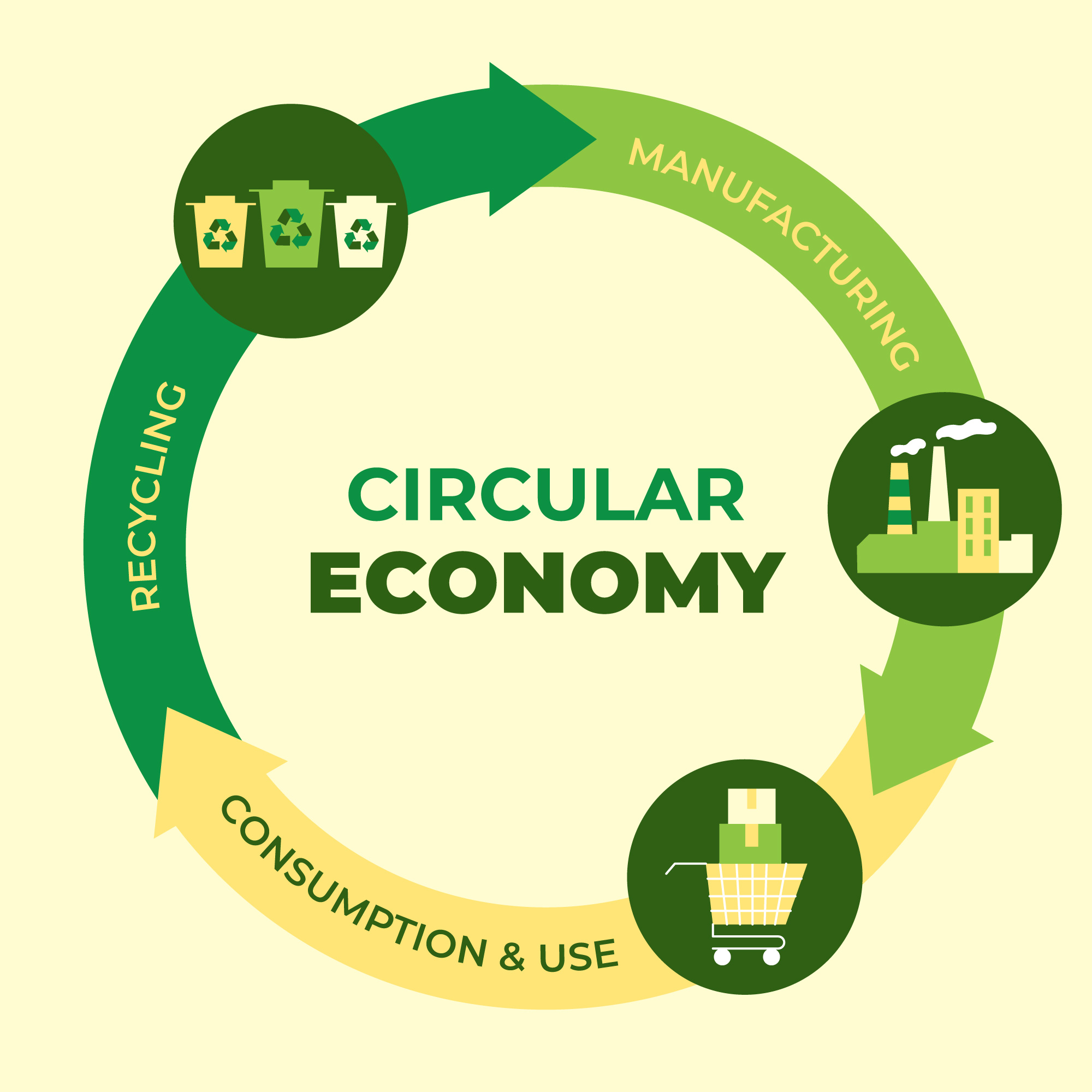
Definition taken from a Google search AI Overview: A circular economy is designed to eliminate waste and regenerate natural systems. Instead of the traditional “take-make-waste” linear model, it keeps materials and products in circulation for as long as possible through sharing, leasing, reusing, repairing, refurbishing, and recycling If you’re older, the above may ring true…
-
AI – Catalyst For Change

AI is a catalyst for change. Ethics, the environment as well as people themselves. This new era is forcing us to look at ethics, to really being to decompose from the abstract to the practical. The environment continues to be a paradox. Yes, AI requires resources to operate and at the same time is involved…
-
Beyond Logic: The Case for the Ethical Processing Unit (EPU)

Pure logic cannot solve a grey area, and waiting for global laws to catch up leaves us vulnerable today. If we cannot teach an AI to feel ethics, we must design systems that are structurally incapable of violating human dignity. This is where we move from philosophy to architecture. Instead of trying to code the…