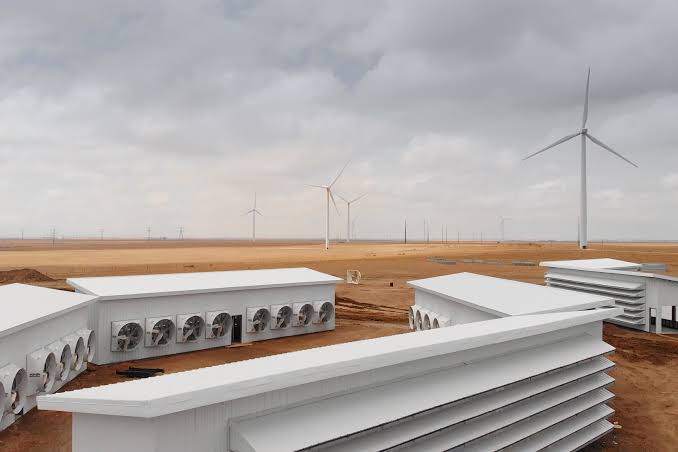
Today there is a lot of talk about data-centers, specifically AI data-centers and it’s complicated. Yes there are serious issues that must be addressed within existing data-centers as well as any new construction. It’s also true that more states (and nations) are passing regulation around what the footprint of an AI data-center should be. The private sector is also well aware of the conflict and is changing the way they operate. To be fair there’s little altruistic ideals behind the change. The change is happening now out of pure survival instinct. Corporations don’t want to see their billion or trillion dollar business model get bogged down.
We’ve Been Here Before
Technology is complicated and sometimes things get lost in the translation. All this talk about AI data-centers isn’t a new pattern. It’s an old pattern. Hindsight tells us it was avoidable, that we just missed the mark. However, applying new technology helped along the way, just as it is today with AI data-centers.
From a high level, the pattern looks like this:
- We’re dealing with a limited resource – Who cares, that won’t happen for decades or perhaps centuries. Move forward.
- Problems occur and profits begin to drop – That’s ok, we’ll innovate our way out of this, so keep moving ahead.
- The problems now become larger and governments as well as other groups begin to push back on the business as usual approach.
- Change occurs, not out of some altruistic ideals, but rather out of pure survival. If you want to survive, then change, otherwise be left behind
Example: Farming vs AI Data-Centers
| Farming Phase | Framing Mechanism | Data-Center Phase | Data-Centers Mechanism |
| Slash and Burn | Clear land, strip the soil of nitrogen and move on | Plop and Power | Build a massive data center next to a cheap fossil fuel grid, suck up local water and strain the grid |
| The Fallow/Idle Compromise | Leaving 33% of the land empty to recover | Curtailed Workloads / Oversizing | Over building infrastructure or throttling compute time during peak grid strain which left massive capital assets idle to protect the grid |
| Norfolk Four-Course (Integrated Rotation) | Planting clover to fix nitrogen, using livestock to fertilize the wheat. | Grid Interactive data-centers | Instead of just taking power, the data-centers gives back. On site batteries and small modular reactors feeds power back to the public grid during peak demand. |
| Green revolution (Synthetic inputs) | Injecting massive chemical fertilizers to force high grade yields | Brute force power purchasing | Buying up every megawatt of green energy credits (RECs) available, masking the fact that the physical data center is still drawing coal power from the local grid. |
| Precision and closed loop | GPS, soil sensors, zero runoff, regenerative soil care. | Regenerative computing | Transitioning entirely to liquid cooling (zero water evaporation), using AI to optimize cooling loops in real-time, and routing waste heat to warm local municipal water or greenhouses. |
Current Examples of Failure
Here’s what the politicians, local, national and even international groups are focusing on.
- The grid capacity wall – Global consumption is skyrocketing to 26% this year alone. A data-center can be built in a couple years where-as permitting and building new high voltage transmission lines to power a data-center can take 15 to 30 years.
- The supply chain mirage – Up to half of the massively publicized gigawatt-scale data center projects scheduled for 2026 are facing severe delays or outright cancellation. The failure isn’t a lack of money, it’s a lack of basic physical equipment. Lead times for high-voltage industrial transformers and backup generators sit at a staggering 2 to 4 years
- Ratepayer backlash – Because utilities operate under tight financial regulations, they are funding massive grid expansions by raising rates on everyday citizens. For example, Dominion Energy in Virginia (the data center capital of the world) just proposed its first base-rate hike since 1992 to handle the sudden data center load.
- The stability threat – AI clusters represent a massive, unyielding baseload that cannot easily be dialed down during peak hours. In fact, grid instability has turned real: a minor voltage fluctuation in Northern Virginia caused 60 data centers to simultaneously disconnect, triggering an emergency 1,500 megawatt power surplus that nearly broke the regional grid.
Regulation and Mandates
If you’re interested in the regulation and mandates occurring today, they revolve around outright rejection of data-centers to strict requirements including funding for grid expansion.
First a visual guide to the US. Check out the graphic here by Data Center Bans.
While the rest of the world hasn’t yet banned data-centers, they are tightening up on the restrictions. See the chart provided by the Global Electronics Council.
This particular article is around the physical data-centers. However, the issue becomes more complicated when we factor in the laws around data sovereignty. You can gather more insight from Duality in an article titled, Data Sovereignty Laws: A Country-by-Country Guide (2026)
Moving Forward Today
This isn’t all doom and gloom just like it wasn’t for the farmers. Let’s take a look at how data-centers are being built today.
- Power Sourcing – The smartest operators are entirely bypassing public utilities. “Speed to power” is the only metric that matters right now. Hyperscalers are building data centers directly adjacent to existing power plants. Projections show 40+ gigawatts of “behind-the-meter” captive data center power coming online by 2028, including directly linking clusters to nuclear plants, commercial solar fields, and massive on-site natural gas turbines.
- Mandatory Liquid Cooling – Air cooling (traditional fans and chillers) physically cannot dissipate the heat generated by modern AI chips. New builds in 2026 are completely skipping traditional raised-floor air systems. Instead, they are utilizing Direct-to-Chip (D2C) liquid cooling, where fluid loops run directly over the processors, or immersion cooling, where entire server blades are submerged in specialized, non-conductive dielectric fluid.
- Geography Dictated by Megawatts, not Latency – Historically, data centers had to be close to major cities (like Silicon Valley or Ashburn, VA) to minimize data travel delay (latency). AI training models don’t care about a few milliseconds of latency. As primary markets freeze new power hookups, tech giants are building multi-billion dollar campuses in historically random, power-rich regions—like Meta’s massive pivot to Louisiana or Microsoft’s investments in the UAE.
Lastly I would like to point out an article I wrote titled Computer Chip Manufacturing. This explains the next generation chip that is a hybrid using both light (photonics) and silicon. Additionally newer data-centers are being built using fiber, not copper for data-transfer. This all adds up as light doesn’t produce anywhere near the heat that cooper does. This drastically reduces power requirements. Less heat, less cooling.
Summary
To sum it all up, yes, there are issues with the existing data-centers and yes, moving forward those issues are being addressed. I’m a believer in the free market over government intervention, however in this particular case, the heavy hammer of regulation and mandates were required. While this article focused solely on data-centers, it’s far from the big overall picture of what we’re facing now after decades of a throw away economy and centuries of abusing the planet. We need recycling companies to up their game, or better yet, new participants to enter this exploding field. The reason is simple. We need a circular economy. You can read more on that in my article titled Circular Economy.