Slow Down
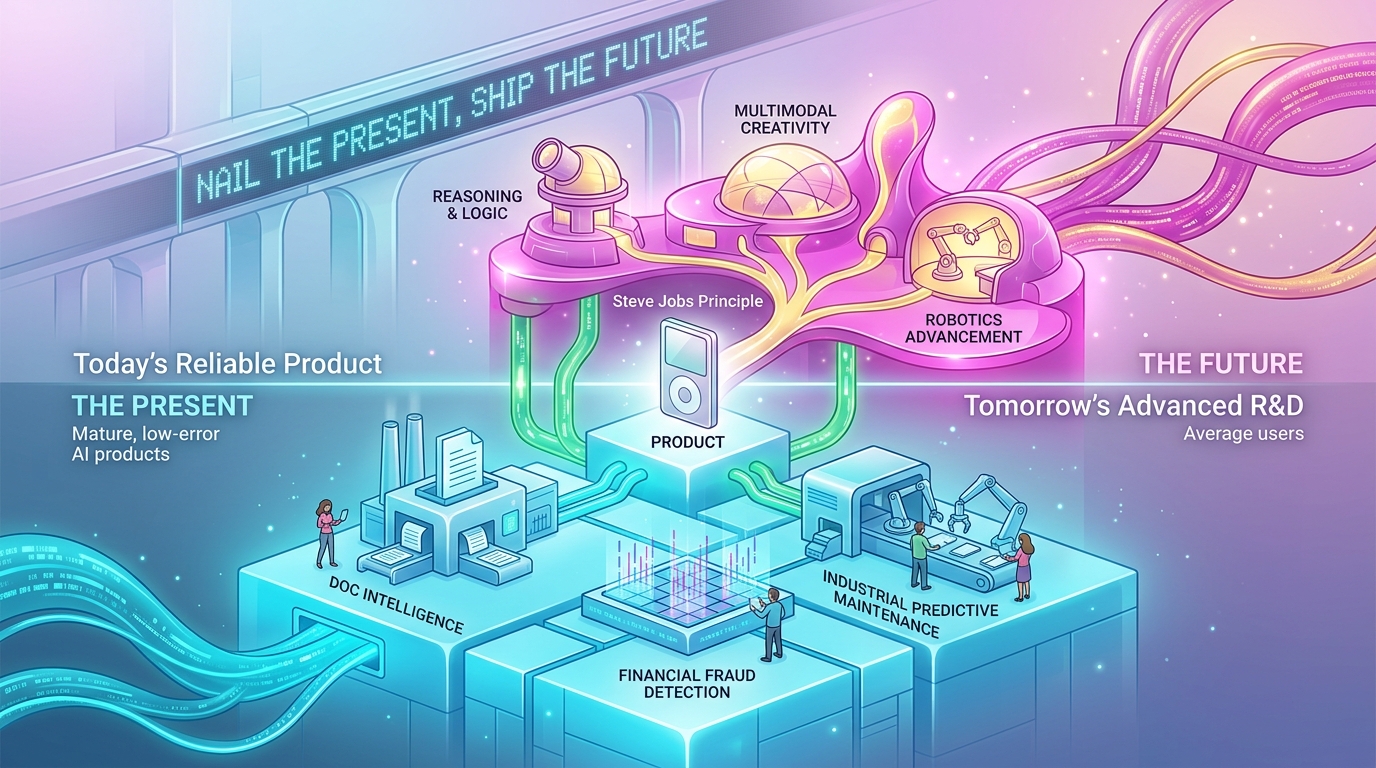
Forget the current hype around AI. Nail the present to EARN the right to ship the future.
Anyone remember the dot-com bust? If not, it was a frantic period of selling hype of product. People gained millions in paper between 1995 and 2000. As you would suspect, the hype didn’t line up with the product and the crash occurred between 2000 and 2002.
I see something similar with AI. Don’t get me wrong, I am admittedly a fan of AI. Huge potential exists for this technology. My concern is in overselling the hype. So much splash around AI can do this or that. That makes for nice glossy marketing materials, but the fact remains it can still be unreliable in some areas. Enterprise pilot programs using AI are failing and the product is not yet up to the hype. SLOW DOWN
Yes – We Can Get There – Be Patient
Yes, AI has come a long way and I for one enjoy watching where it will take us in the future. The keyword here is FUTURE. In my opinion, the industry isn’t doing us any favors (or AI for that matter) by throwing around powered by AI for this and that. STOP.
Ok, rants over. Let’s look at the numbers.
Current Average Error Rates
The numbers say, to me, AI is being overhyped, but doesn’t paint a bleak picture at all. It can and is a useful technology.
| Domain/Implementation | Un-grounded Error Rate (Generative AI) | Grounded/Guardrailed Rate (RAG – Retrieval Augmented Generation | Primary Failure Modes |
| Legal Research & Citations | 58 – 88% | 5 – 15% | Fabricating case law, inventing court citations, and misapplying precedent |
| Medical Reference & Diagnostic Q&A | 43 – 69% | 1.5 – 5% | Fabricating journal PMIDs/DOIs, misinterpreting rare conditions, negation errors |
| Software & Code Generation | 18 – 30% | 2 – 8% | Importing non-existent libraries (package hallucinations), off-by-one logic errors |
| Financial & Quantitative Analysis | 15 – 35% | < 2% | Multi-step calculation drift, misinterpreting complex tabular financial disclosures |
| Grounded Document Summation’s (RAG) | 10 – 20% | 0.7 – 2% | Contextual mis-attribution, subtle omissions of negative constraints |
| Open ended generative writing | 20 – 50%+ | N/A (unconstrained) | Over-generalization, plausible-sounding factual fabrications |
Above stats came from Google’s Gemini.
Instead of futuristic, flashy content to sell AI, let’s take a look at where AI is today. Situations where it can and is, supportable, reliable and proven.
Proven AI Areas of Implementation
Here’s a list of current AI wins within industry.
- Financial Fraud & Anomaly Detection: Systems processing billions of transactions daily evaluate risk in milliseconds. Models operating under human supervision achieve extremely low false-positive rates, directly saving banks tens of billions annually.
- Predictive Logistics & Supply Chain: Companies rely on machine learning for dynamic routing, inventory placement, and demand forecasting. These systems operate with low error margins and cut waste by 15–25%.
- Medical Diagnostic Assistance: Specific diagnostic tools—such as vision models screening for diabetic retinopathy or mammogram anomalies—consistently meet or exceed human specialist accuracy. They act as reliable double-checks for radiologists.
- Industrial Predictive Maintenance: IoT sensors paired with time-series ML models predict mechanical failure in manufacturing, aviation, and power grids. By flagging part failures before breakdown, they reduce unplanned downtime by 20–30%.
In addition to the current wins, we’ve also got sectors that are now stabilized and reliable productivity drivers.
| Category | Primary Use Cases | Business Impact |
| Developer Tools | Code auto-completion (e.g., GitHub Copilot) | Speeds up output by 20–30% with immediate human review built into the developer workflow. |
| Document Intelligence | Extracting data from unstructured PDFs, invoices, and contracts | Reduces manual data entry by 80%+ with human-in-the-loop validation for edge cases. |
| Deflection Chatbots | Automated tier-1 customer service for FAQs | Successfully resolves 30–50% of routine inquiries without escalating to human agents. |
We don’t need hype, we should promote products where AI excels.
Shift to Delivering Finished Products
I just re-read that heading too and I’ll let it stand. It’s obvious to all of us regular people, but apparently not so obvious to some corporations.
My message to those competing in the AI space is simple and stated in the title. Nail the present to earn the right to ship the future.
To protect the reputation of AI while still funding future breakthroughs, corporate tech strategies must pivot away from pure research hype toward disciplined product engineering.
| Step | Corporate Strategy | Real-World Outcome |
| Ground the Present | Lock in low-error, domain-specific AI models for core features (e.g., fraud prevention, basic document parsing, targeted search). | Establishes high user trust, near-zero defect rates, and predictable utility. |
| Build Sustainable Revenue | Sell finished, polished tools on traditional SaaS or enterprise software models rather than burn capital chasing benchmarks. | Creates self-sustaining cash flow that insulates the company from venture market swings. |
| Funnel Profits into R&D | Direct a predictable percentage of real operating profits straight back into next-gen research (multimodal logic, robotics, reasoning). | Ensures future innovations reach full maturity and high reliability before public release. |
The goal isn’t to stop AI progress, it’s to treat AI like a real product. (duh)
Thoughts Leading Me Here
For those that have read my articles, this may seem like I’m hedging. I’m not really, I am still a fan of AI. I think the future holds remarkable things. However, I was reading a separate article on enterprise failures with AI pilot projects. The bulk of the reading was on organizational failures in leadership as well as infrastructure. That’s all I needed to push me into that direction, failure.
I began to think, wait, we know AI has failure rates, some higher than others. We know that the neural-net remains a mystery. We are uncovering more knowledge through the study of mechanistic interpretability, but we’re not there yet. Finally, we know AI makes mistakes that it passes off as true statements.
Our ability to debug AI models is very low. Coming from a deterministic background, that first floored me. I get the paradigm shift from deterministic to probabilistic but the fact remains we currently lack the tools necessary to debug this.
That’s how I got here and it is because I’m a fan of AI that prompted this article. With all the ‘powered by AI’ popping up all over the place, my concern is the industry could very well be setting itself up to fail and fail big. As the hype continues, what happens as the failures mount up? How far will that go until the average user pushes back? Oh, this is AI powered? NO WAY. I don’t want it.
Summary
Nail the present to earn the right to ship the future. Give us solid, reliable, supportable products. Build credibility for AI in the areas known to provide these wins. Funnel profits back into R&D to improve, expand your product lines and to research and test future main product additions. It’s strange to say this, but it’s worth repeating. The goal isn’t to stop AI progress, it’s to treat AI like a real product. (duh)
Remember, users are those that can make or break a company. All software vendors need to earn the trust of its customers. You want repeat business? Deliver a solid, reliable product that does what your sales material says it does.
When things go wrong and they will, be ready. Users could care less which algorithms you used. They certainly won’t care you lack the tools to debug your neural-net. Stop using obscure scientific jargon in an attempt to explain a failure. If it failed, that’s it. It failed. Fix it. Pretty simple. If you’re not ready and willing to stand behind your products in that way, then you won’t earn the right to sell us your future products.